For three years I tried to make a web show(titled Unicorns) the traditional way. I met every studio and OTT platform in Bombay. I sat in every room. And in every room the energy was the same -who are you, and why will you be able to do what you’re saying you’ll do?
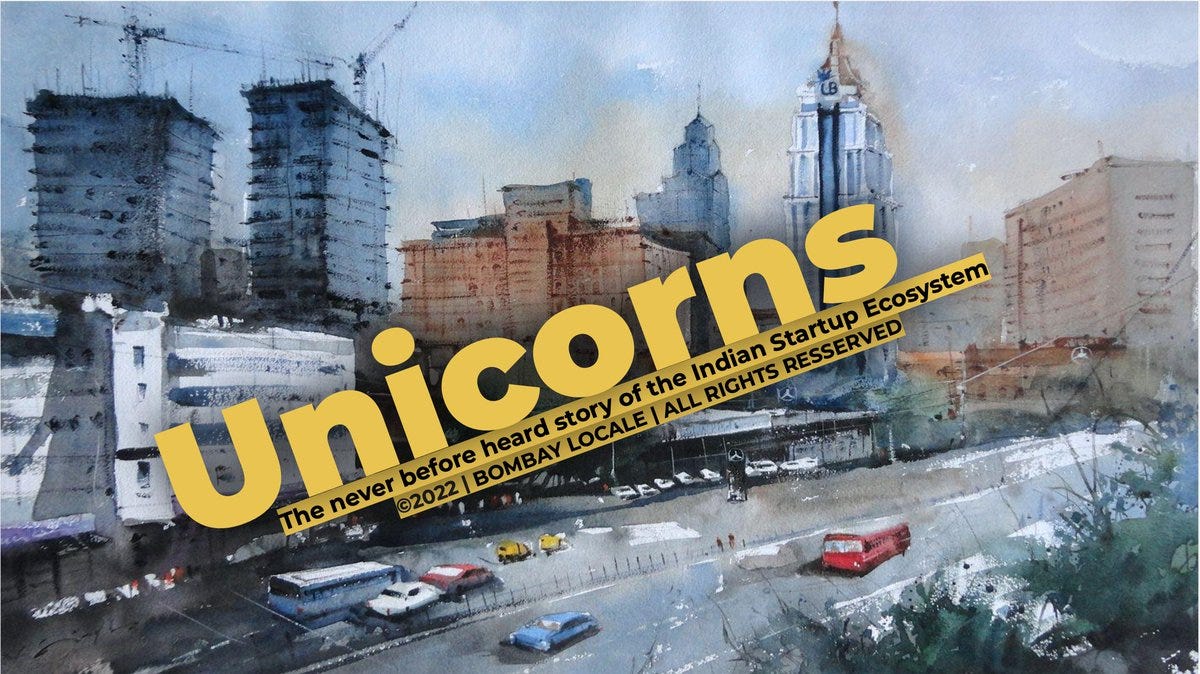
I didn’t have a good answer for them. Not one they’d accept.
So I stopped seeking permission or for that matter asking.
Three years later we have a 70-minute AI-native animated feature film. Made outside the system, in 35-days, with a team of 12. Without their permission. Without their money. Without their blessing. And two more in the pipeline.
It is not a comeback. It is a proof that it can be done.
In Moneyball, Brad Pitt asks Peter - whose nephew are you?
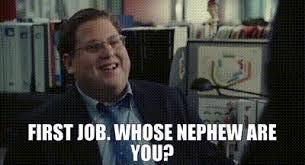
The question, “whose nephew are you?” is the system. Baseball doesn’t gatekeep because it is broken. They gatekeep because scarcity of access is what makes access valuable. The gatekeeping was the product and it was so by design.
Cinema has been the same design with better lighting and optics. Hollywood families. Studio darlings. People for whom the door is always slightly ajar. For everyone else - grey some hair, learn the room, wait your turn. Cinema isn’t like tech where 30 is senior. In Cinema, at 30 you are still auditioning.
Most large IP studios have a few properties which get repackaged and repurposed every year and make for most of their revenue. That system is changing. But not for the reasons which look obvious.
The Large Labs Run The Same Play
@OpenAI has maybe 15 people who actually matter to the future of intelligence. The rest is operations. Same for every other lab. Strip away infrastructure, policy, GTM, HR - you’re left with a tiny nucleus of researchers whose intuitions are shaping where the world is headed. Ilya is one person. Andrej is one person. When they leave, something irreplaceable walks out the door and a stockpile of cash can’t replace it.
In a similar breathe, Spielberg is one person. Kubrick was one person. Nolan is one person. When Thalberg(1899-1936) died at 37, MGM never recovered - and they took time to even understand why.
Today the lab system is the studio system. The researchers are the stars.
And just like the old studio system, the institution is desperately trying to make itself bigger than the individuals. NeurIPS papers are the new film credits. A PhD from a top-5 program is the new nephew. The gatekeeping didn’t disappear. It got a new costume.
These are not product companies. They are talent agencies that also ship software. CAA with a data centre. 😂
So when people say GenAI is going to democratise media - most are describing a tools problem. The tools are getting cheaper. The permission structures are not.
But here is the one thing that has genuinely changed.
Making is permission less. Attention is porous. Continuity is closed.
The nephew question though survives at the capital layer. It is dead at the making layer. When making becomes permission less, capital eventually follows the work.
That has never been true before. Not once in the history of this industry.
The Washing Machine Problem
Every video model company right now is competing on specs and evals. Frame consistency. Motion quality. Photorealism.
They are washing machine companies arguing about rotor speed.
Nobody has claiming clean clothes. And I understand why!
Visual fidelity has been checked. Where do you go with it?
A 15-second clip can be stunning. Because it doesn’t have to mean anything. The moment you push models to feature lengths you need a nervous system running through it - the cut at minute 43 that lands because of what happened at minute 23, the costume choice - that constrains the palette the colourist inherits three months later, the editor’s assembly that reveals a structural flaw nobody caught in the script.
A film is NOT a product. It is a process system where every department’s output becomes the next department’s input - and at the center of that critical path sits human judgment. Always. The decision to cut a scene. The recognition that the emotional logic requires something the plan didn’t anticipate.
The model companies understand this. That’s why they stay upstream. Selling gas without building the engine is a decent business - until someone builds the engine.
I’ll tell you what this actually feels like from the inside.
You generate a shot. Beautiful. Technically clean. Visually competent. You generate another. Also beautiful. You go to stitch them together and everything falls apart - because one output has no idea the other exists. These are non-deterministic generative models. The model companies know this. The ML engineers who built them know this. Even they cannot tell you with certainty what will come out of a prompt and a reference image on any given day.
The only thing that holds it together is the nervous system in your hands. Editorial judgment. The ability to feel what a scene does - not to you personally, but to the hundreds of thousands of people who will eventually sit in the dark and watch it. You cannot automate that feeling. You cannot prompt it. You have to have the nervous system/judgement in your control. And trust it and be right more often than you are wrong across the length of the film.
That is the problem nobody in this industry is talking about. And it is the only problem that actually matters.
What Editorial Intelligence Actually Is
If editorial intelligence were pattern recognition - pacing, structure, emotional arc - then it’s already solved, isn’t it. Models trained on a century of cinema have consumed more than any human editor will in a thousand lifetimes. On volume, on consistency, on not having a bad day at work - these models win.
But editorial intelligence is not pattern recognition. Pattern recognition is the floor. Every competent editor has it.
What separates the competent from the irreplaceable is the specific grievance, interpretative judgement and process systems.
Coppola didn’t make The Godfather because he understood narrative structure. He made it because he was an Italian-American outsider in a system that kept telling him he didn’t belong - and he needed to say something true about power and assimilation that nobody inside that system had the wound to say. The film is technically about the Corleones. It is actually about Francis Ford Coppola’s entire life up to that point.
The models optimise for resonance with existing emotional templates. It is a brilliant archaeologist of feeling. What it cannot do is discover something that has no precedent and find the form that makes other people feel it for the first time. That gap - between the known emotional vocabulary and the new thing that needs saying - is where editorial intelligence/storytelling lives.
Truth in filmmaking is not emotional accuracy. It is specificity of witness. We don’t just watch films. We use them to locate ourselves in history.
The Large Media Company of Tomorrow and how builds this?
I’ll tell you exactly who builds the large media company of tomorrow - those of them who have lived on real film sets, run huge crews, reads filmmaking as an operations research problem, attempts unimaginable stuff with GenAI(without seeking validation) and has the right brain-tools to understand both technology and stories!
Who sat in every room and heard the same question - whose nephew are you? - dressed up in a hundred different ways.
We have been building @BombayLocale for seven years. Every client, every film, every workflow rebuilt from scratch - was practice for this exact moment.
The first three feature films are the proof. It holds together - not because the visuals are impressive, though they were. Because it has a nervous system - interpretative human judgement - running through it.
That nervous system isn’t the model. That was our team @astikanand2707, @kashyap_rohit_, @anupamsidhant, @_atharvkotekar, @heybipasha, @DayamayPaul and others.
We didn’t plan it this way. We followed the problem until we ended up here - at the exact intersection of editorial intelligence and AI-native production, building the thing that doesn’t exist yet because nobody else has lived in both worlds long enough to know what it needs to be.
The tools finally caught up to the problem we already knew needed solving.
The nephew question doesn’t apply to us, anymore. We didn’t wait for permission.
The large media company of tomorrow will not come from inside the system.
It will be built by people the system never bothered to let in.