Two Kinds of Problems
Think of a spoon.
Not as a metaphor, but as an object.
A spoon exists because a problem exists: food must move from plate to mouth. Fingers work, but inefficiently. The spoon solves the problem. The task ends.
That is an exhaustive problem. It has a terminal state.
Most problems in the real world aren’t like that. Most of them are non-exhaustive problems.
A non-exhaustive problem has no terminal state. It f**ks around the moment you attempt to solve for it. Trying to solve it once does not close the loop. It is like a virus, it doesn’t die. These problems do not exist in broken systems/silos waiting to be repaired.
For eg: You cannot solve loneliness. You cannot solve the need for meaning. You cannot solve storytelling. You can not solve filmmaking.
Exhaustive problems end. Non-exhaustive problems don’t.
Products solve the first. Processes are the only honest response to the second.
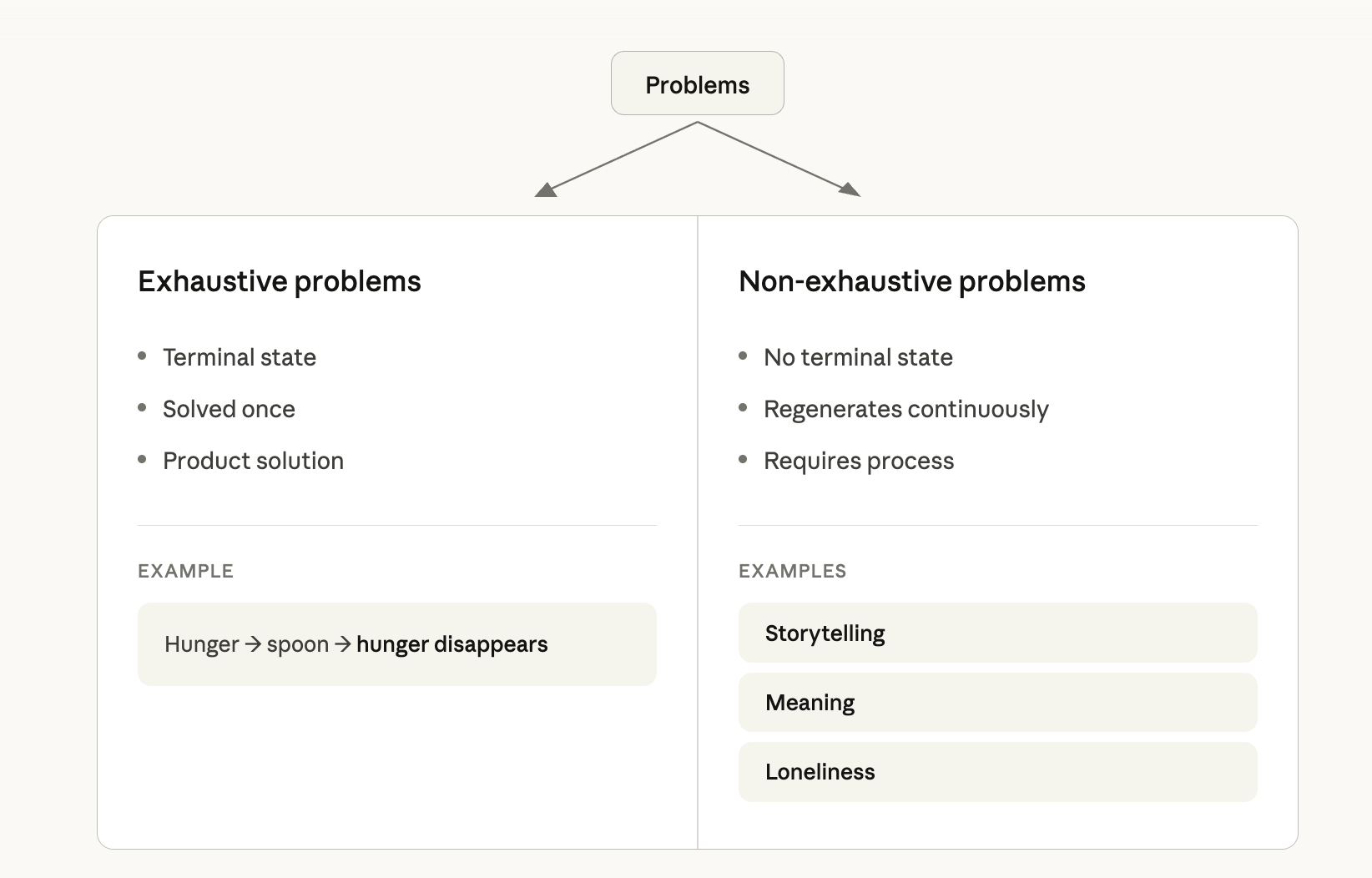
Tech companies are very good at solving exhaustive problems and very confident about solving non-exhaustive ones!!! We will address that in this post with a GenAI filmmaking lens.
Generation Is not Creation
This confusion shows up on X discourses in what people are saying about GenAI and filmmaking. I don’t agree in so many ways. We’ve already completed a feature-length film using these tools. More on that later.
Here’s the thing: a machine is only as good as what it produces. Not what the demo suggests. Not what the benchmarks promise.
I am more interested in what actually emerges when someone tries to make something real with these video models. Current AI video models produce short objects - technically impressive, aesthetically smooth - emotionally inert and sometimes editorially unusable.
All of the models are optimised for visual fidelity because fidelity is measurable. What they do not optimise for is tension, character, consequence or narrative surprise! These cannot be benchmarked.
Generation produces material. Tons of it. Write a prompt - push a button and you get a video clip. Fair! It is often confused with creation.
Creation is the selection and shaping of these generated material(s) into meaning. Creation emerges from judgment applied in service of an intention. In this case, making of a coherent film/movie.
AI has made generation cheap. It has not made judgment cheap.
Filmmaking is not a generation problem. It is a systems and judgement problem.
Filmmaking Is a Process System!
A film is not a product, it is a process system. It is the output of extraordinarily complex processes.
In traditional filmmaking, making a film means managing a production network where multiple departments run simultaneously, each producing outputs that become inputs for others.
The costume department affects what the camera can light. Production design constrains the palette the colourist inherits months later. Sound capture determines what the composer has to work with. The editor’s first assembly often reveals structural problems in the script that nobody saw in development.
In operations research, systems like this are described using something called the critical path.
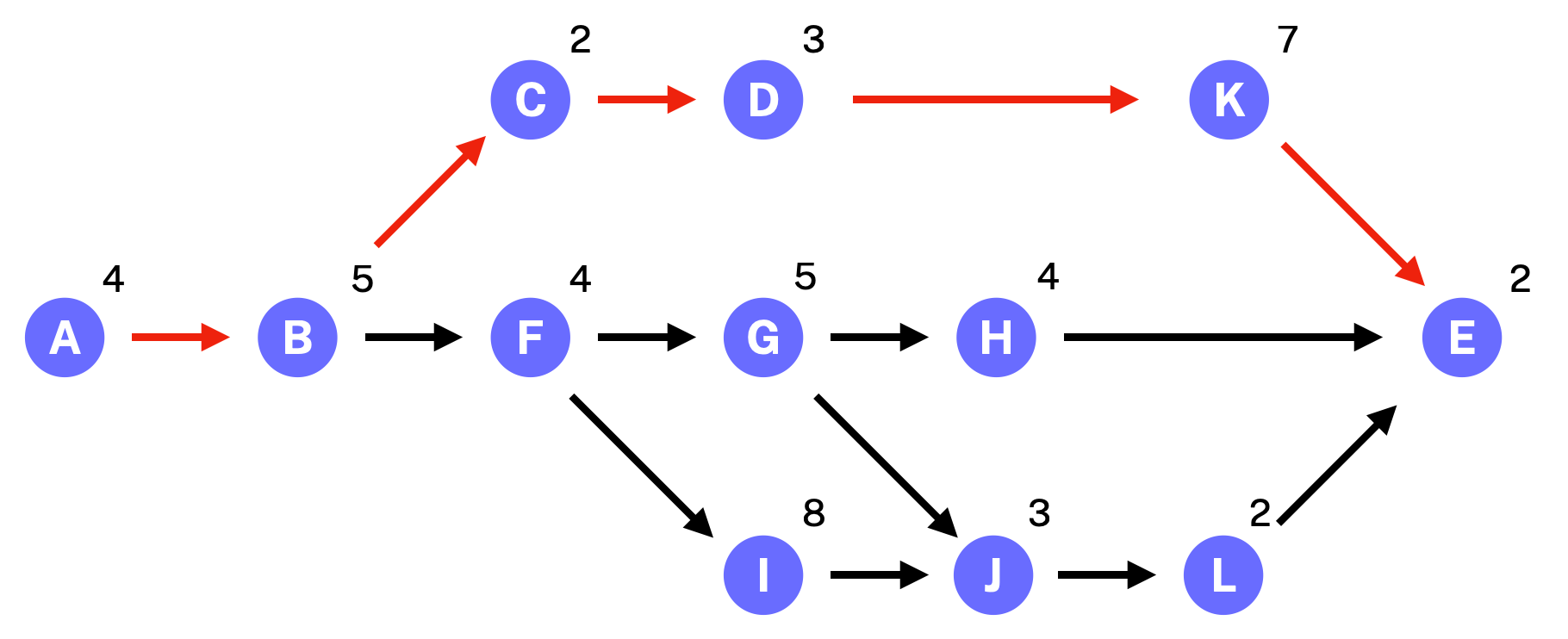
Tasks - some parallel, some sequential - contain a chain of dependent steps whose total duration determines how long the system takes. That chain is the critical path. Everything on it has zero slack. Delay one step and the whole system delays.
Systems thinking is not about speeding up everything. It is about identifying the critical path and understanding what cannot be rushed.
In filmmaking, whether traditional or AI-workflow native, the critical path runs through human judgment.
The decision to cut a scene. The call to retake a scene. The admission that the emotional logic of the film requires something that the original screenplay did not anticipate.
These decisions sit at the centre of the system. Every department’s work flows toward them and flows from them.
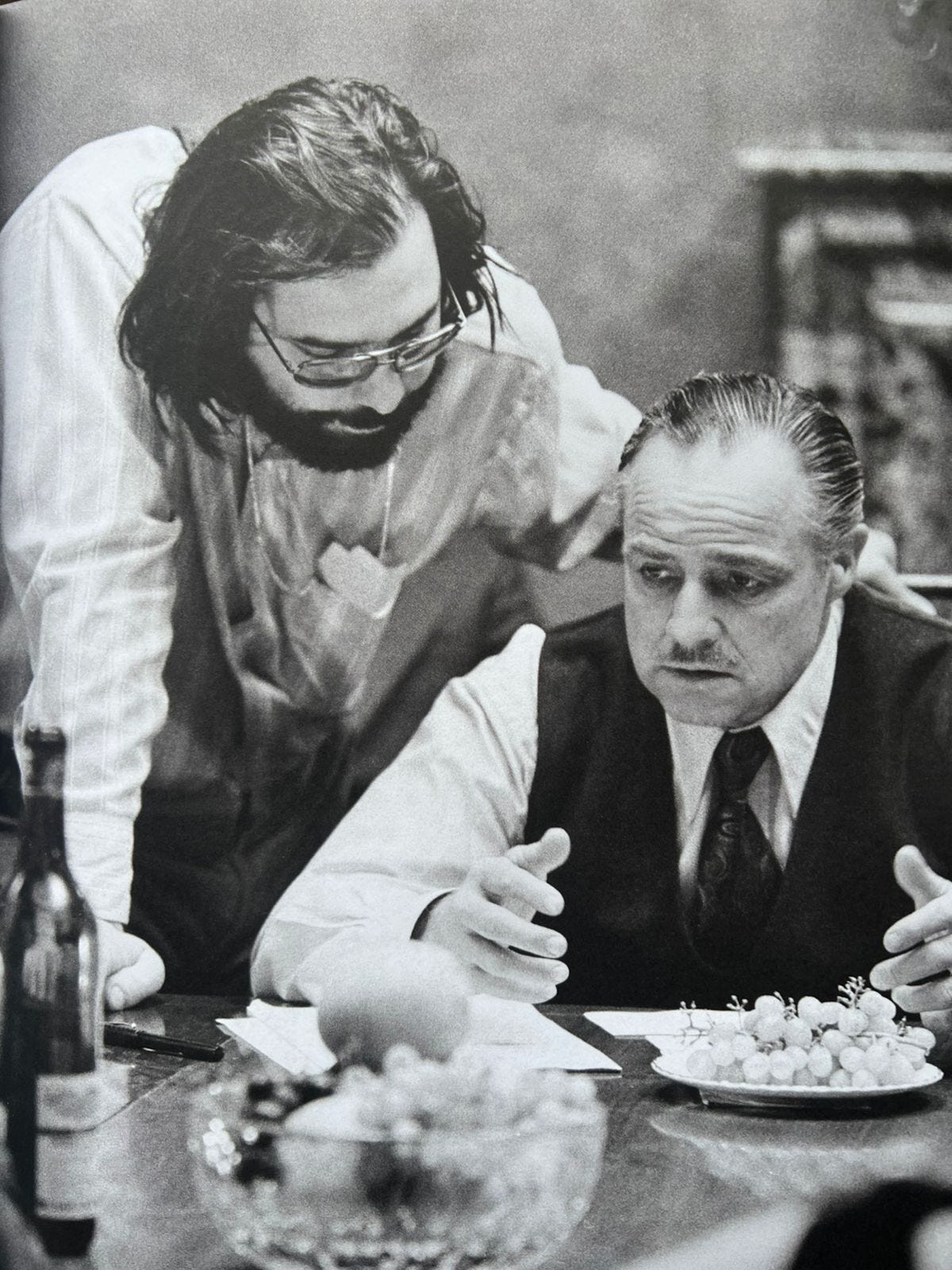
Consider this in practice. Coppola didn’t shoot the Godfather’s most iconic scene - Vito Corleone receiving guests in a dark study while his daughter’s wedding plays outside - because it was scripted that way. It emerged from an interpretative judgment about power, contrast and what the film needed to feel true.
What AI Will Actually Accelerate in filmmaking?
AI is meaningfully changing pre-viz. Directors are able to rough-cut entire sequences before a frame is shot.
It changes location scouting reference, background generation, certain VFX passes, ADR workflows(post-prod) and elements of production design/art direction.

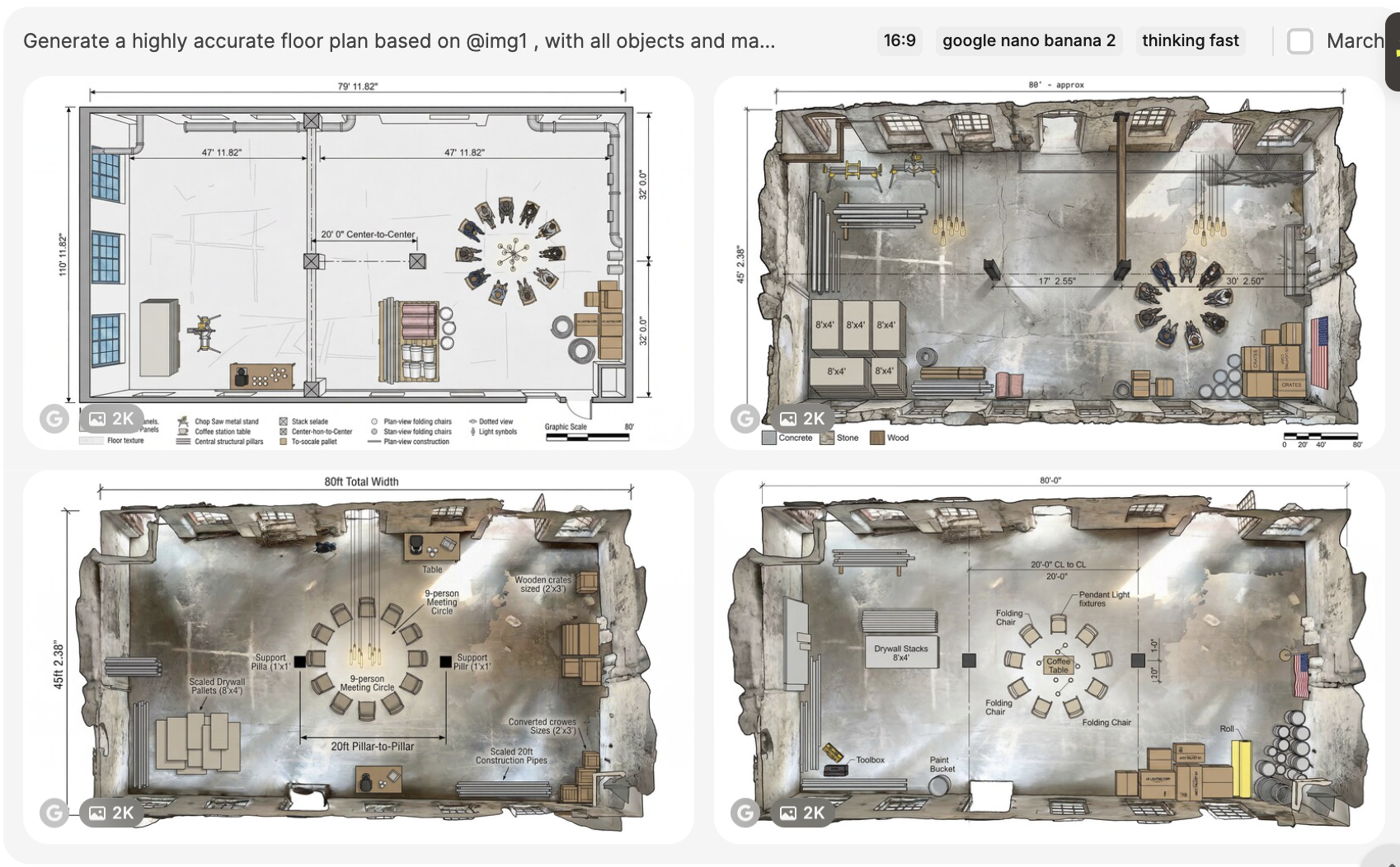

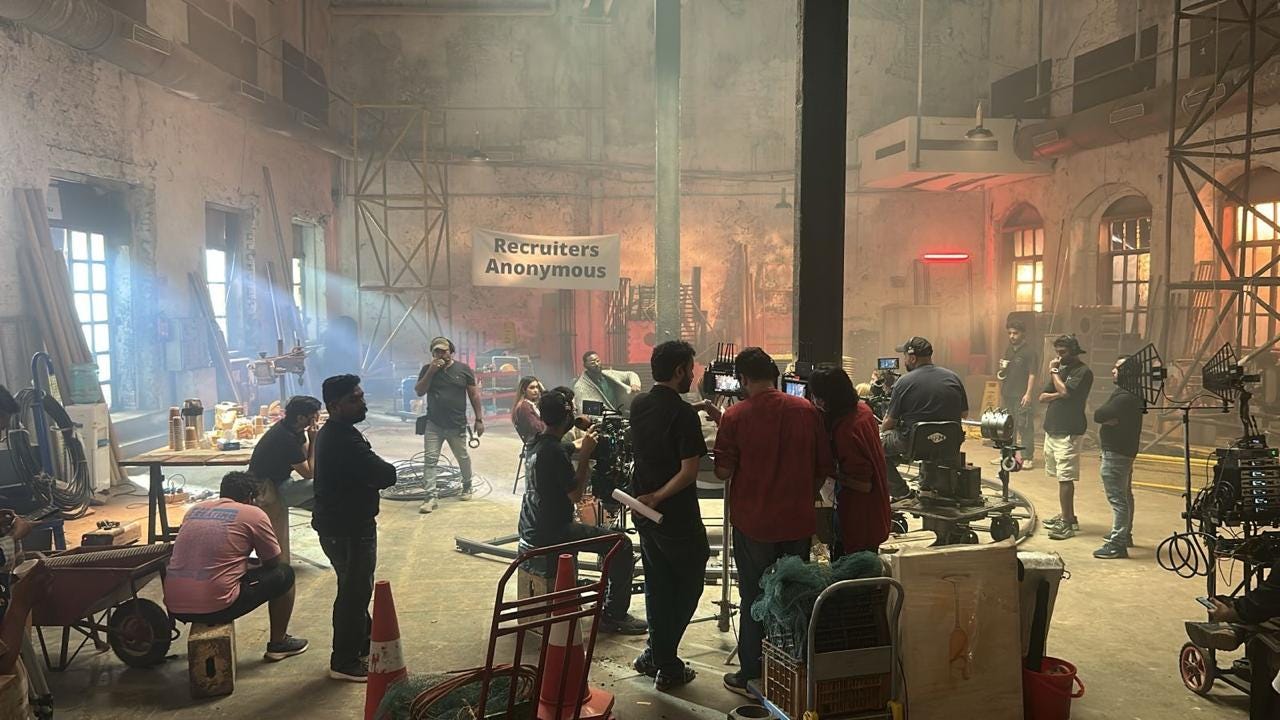
The above are real accelerations. AI is actually compressing timelines and reduces costs in parts of the systems network that currently have slack.
But I notice something here - and all these tasks have something in common.
They all sit off the critical path.
They accelerate inputs. They aren’t changing the nature of the interpretative judgment these inputs are flowing toward.
The network gets faster/cost efficient in certain places. The critical path still remains human.
Where Value Moves?
When generation becomes cheaper, something predictable will happen.
Content supply will increase. Coherence will become scarce - it already is.
Scarce things become valuable. Coherence becomes the asset.
The frontier is not the viral clip or the technically dazzling demo. Those prove the model works. They do not prove that storytelling with GenAI works.
The final frontier is long-form narrative - stories that sustain attention, build characters audiences remember. And generate IPs that survive generations.
The IP studios that matter in ten years from now will not be the ones that generate the most footage or films. They will be the ones that build the tightest systems for interpretative judgment, processes - while machines/tech accelerate everything around it.
The spoon got better.
The meal still has to be made.