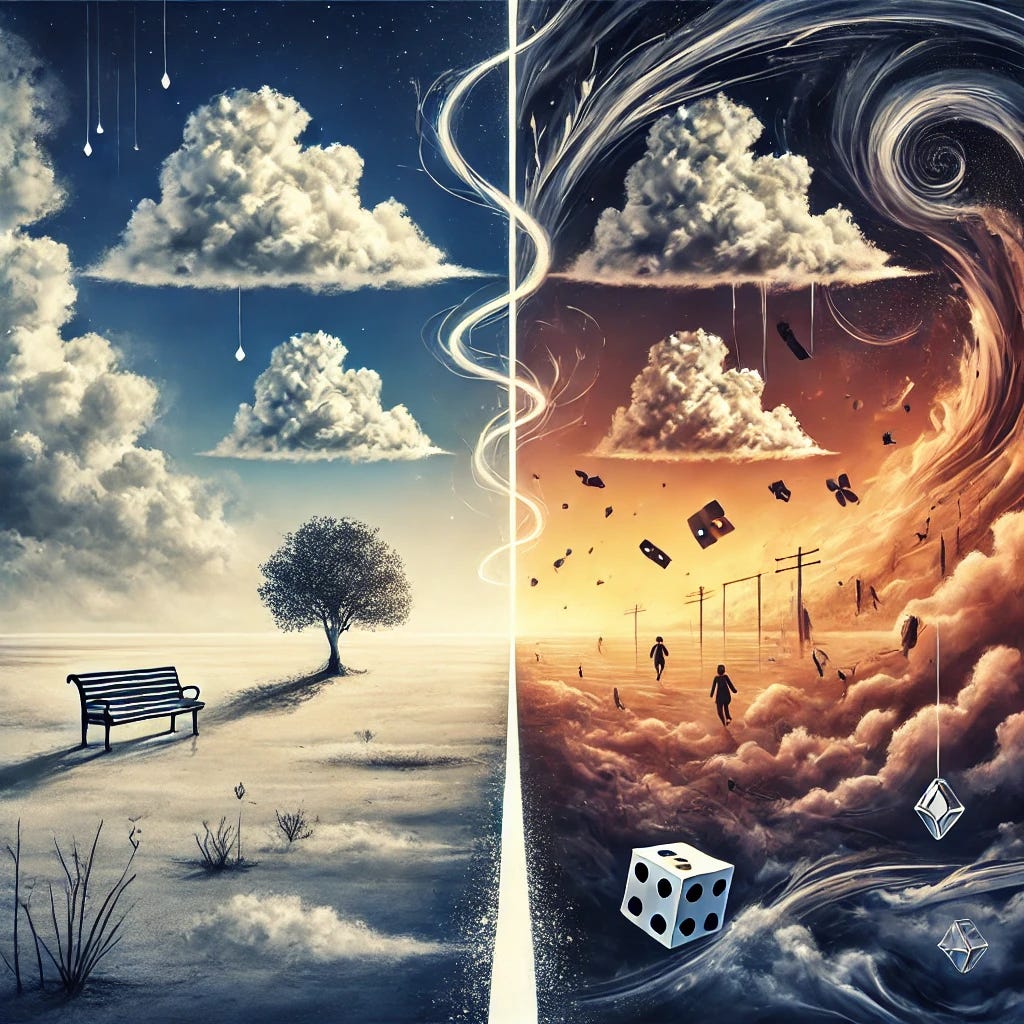
Life feels like a game of poker/darts—uncertain, unpredictable, and often unforgiving. You might win big or lose everything, but the act of playing might just be the point. I have a vague idea of the kind of life I want to live. But that is not enough. I read this tweet the other day, which made a lot of sense - you are guaranteed 100 slaps in your life - get them as soon as possible. Or the dictum of chillies and sweets in life. What can one do but play, and why choose one path over another? Such questions, inherently tied to existence, seem to shape the human condition.
The Nature of Struggle
Pain and uncertainty permeate life. Things take time by design, and fights are meant to be unfair. But is there a purpose to all of this? What compels us to live and strive despite the hardships? The proverbial slaps of life, as some suggest, are necessary lessons, and the sweetness of occasional victories comes only through enduring the chillies.
On Progeny and Permission
Bringing someone into the world raises ethical dilemmas. Progeny is a natural act, yet does it require moral justification? The decision bypasses the consent of the one being born. Can this be framed in terms of right or wrong? Perhaps it’s just another cycle of nature, perpetuating itself, leaving us to grapple with the why.
The Morality of Ending Things
The act of taking one’s own life or another’s has long been debated in moral and philosophical contexts. Hindu wisdom suggests we shouldn’t destroy what we cannot create, equating such acts to theft—from families, from societies, and perhaps from existence itself. Yet, in the face of meaninglessness, is this morality enough to anchor us?
The Illusion of Meaning
Some claim life is meaningless, but if so, why create, why write books, make movies, or hold festivals? Are these not attempts to counteract the void, to find or impose meaning? Or are they steps toward a life of ease and security that risks sacrificing freedom for comfort? The tension between creating meaning and embracing nihilism remains unresolved.
The Paradox of Capitalism and Progress
Capitalism promises opportunity but thrives on inequality. Like the monarchic systems before it, it concentrates wealth and power. Consider the Jagat Seths funding the East India Company against Bengal’s royalty during a famine—a stark reminder of capital’s relentless hunger. (Did the biggest bankers in the whole world in the time(bigger than Rothschilds and the gentry who funded the voyages of Columbus/Vasco/Magellan) - not have the might or wherewithal to put food on the plates of the citizens of Bengal during the Great Famine of Bengal(1770-1780) - and not to forget that GDP/Capita of the Province of Bengal was the highest in the whole world at that point in time.) China’s model, though labeled communist, mirrors capitalism’s drive for dominance on the global stage. The perpetual tug-of-war between systems, ideologies, and nations leaves individuals as mere cogs in the grand machinery.
Human Nature: Competitive and Contradictory
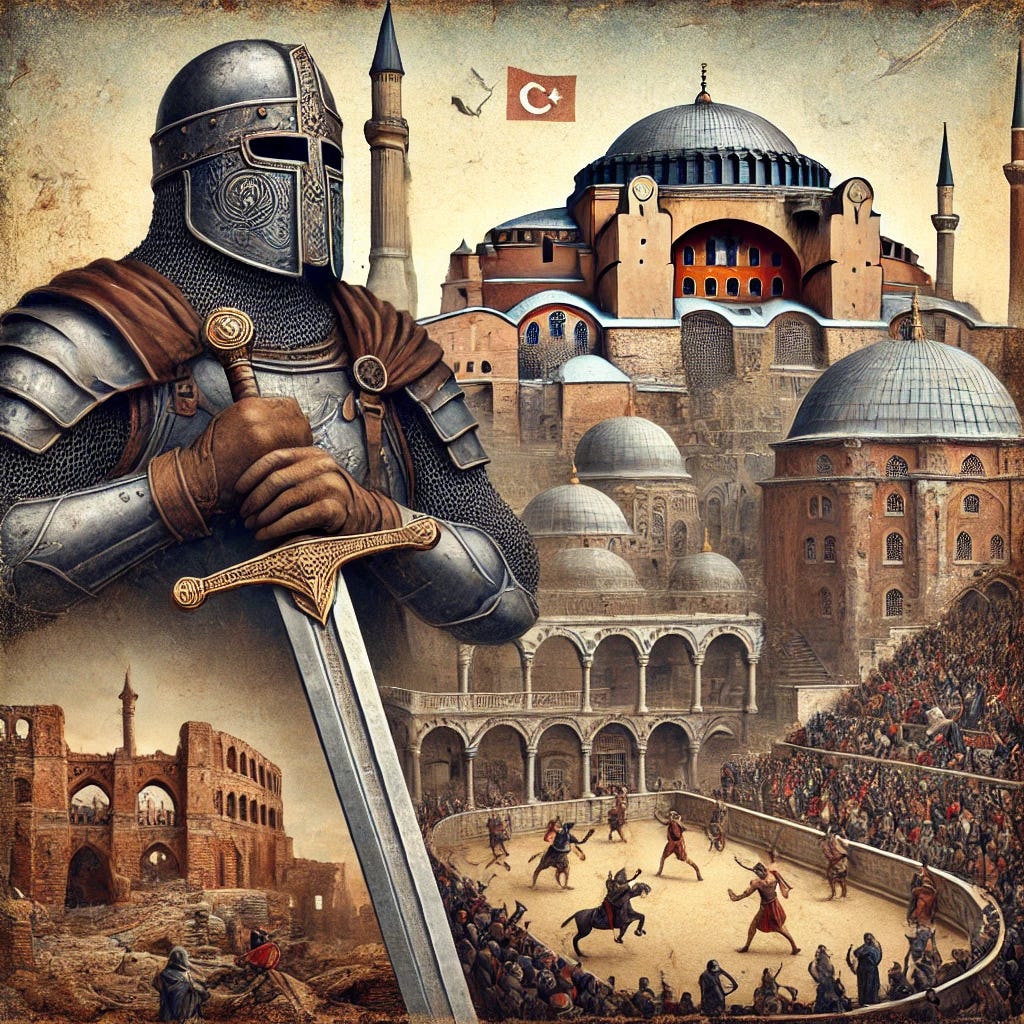
From the moment of conception, humans are competitive beings. History—from Roman gladiators to modern warfare—shows our deep-seated inclination for violence and dominance. Even acts of kindness and cooperation are often overshadowed by jealousy, ambition, and the mirage of glory. Yet, it is these very contradictions that make us human.
The Mirage of Glory
History is filled with tales of men chasing elusive ideals. Crusaders pillaged in the name of faith, seeking redemption for their sins. Crusaders who took arduous journeys from the villages of France to the promised Holy Land. What Holy land? A place fabled for ten centuries - where Christ was born and crucified. What they must have felt when they had to steal food from similar Christian populations or to pillage the dwellers of the small cities and towns to satiate their carnal desires.

When Galileo was charged for hearsay by the Catholic Church for propounding the Heliocentric model of the Solar System - he pleaded sorry - and walked away from the noose.
Is it always right to die for right? Is it right to stay by the ideals? Is it moral to do things which are immoral? Aren’t they all a function of time or the principality we are living in - slavery was legal not very long ago!
Conquerors like Mehmed II(conqueror of Constantinople) sought eternal fame, toppling empires to inscribe their names in history. Were their actions noble or merely human? Perhaps the mirage of meaning, the optimism of something greater, drives us all. Imagine a 21 years old toppling the Roman Empire? He pillaged the so called seat of Eastern Orthodoxy - converted all the Churches into Mosques - removed everything Byzantine in the city and added a new flavour to it as we know Turkey today. Ottomans had failed to take the Roman city in the last 20 attempts - it is very odd as to why humans want to do things? Or make incremental progress in life or personal endeavour in general.
Modern Strivings in a Chaotic World
Today, we seek better phones, better jobs, better everything—an endless cycle of striving. Even those who retreat to a simpler life cannot escape the world’s relentless march forward. The paradox remains: we strive for progress, yet it often feels like chasing a shadow.
Embracing Contradictions
In modern times when it is not very difficult to live on the bare minimum for someone who is a tad bit above the threshold - people still pine for better things.
A better mobile phone, a better product feature, a better payroll software, a better NLE, a better SaaS product, a better resolution of the screen, a better internet connection, a better army, a better son, a better fighter jet, a better Aircraft carrier - the whole idea that we need or want things which are better is because of the fact that even if you choose to sit quietly and go around your life sitting in a jungle in the bookish sedentary lifestyle - the world will keep playing.
So why not play along?