To understand money, one must understand what money does.
It is not the currency in our pockets or the numbers on a screen, but the possibilities it creates and the systems it sustains, for eg: the convenience of fast fashion, the immediacy of quick-commerce, the ability to put a price on an artist’s craft or a labourer’s time.
Yet, behind this abstraction lies a stark realisation: we rarely pause to think about what this system makes of us. Are we just players in this economic game or are we are shaped by it?

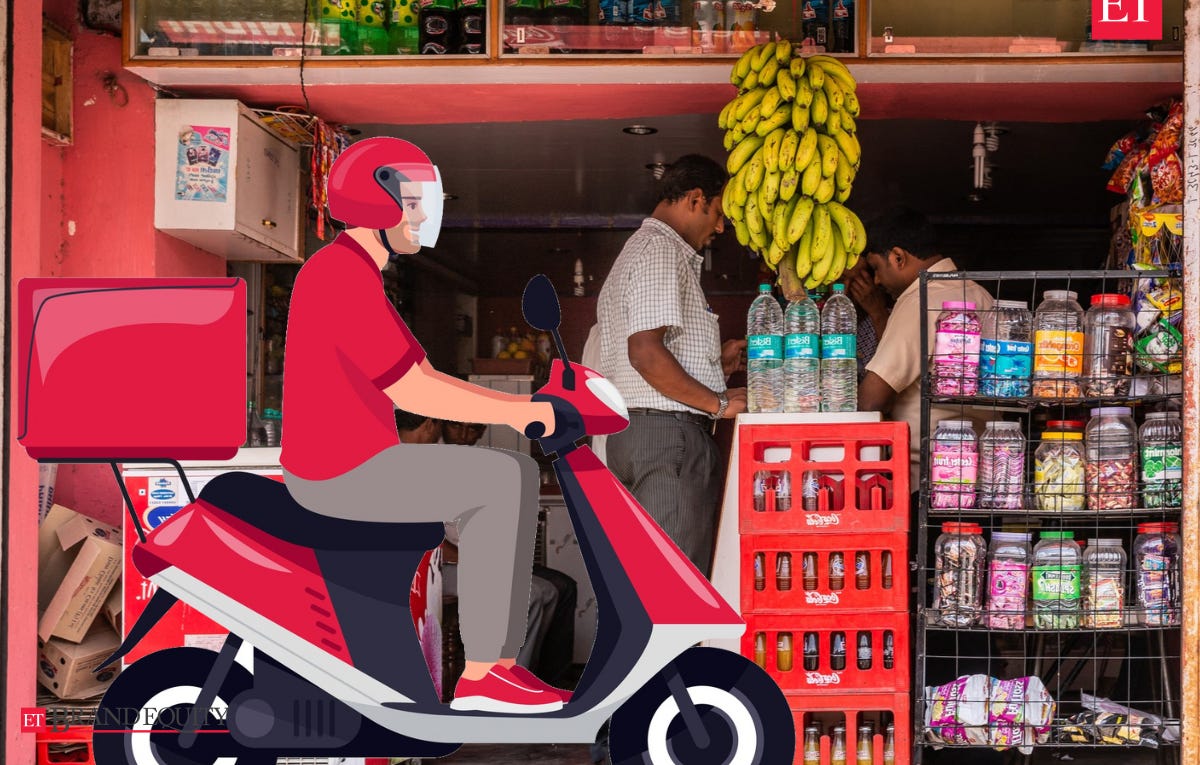
Take fast fashion and quick-commerce, in the Indian context, the twin titans of modern convenience. They promise us instant gratification, erasing the distance between desire and fulfilment. We scroll, click, and receive, rarely reflecting on the hands that stitched our garments or the environmental costs of shipping goods across the globe. I find myself complicit in this cycle - partaking in it, criticising it, yet unable to detach from it. The convenience offered is seductive, but it also narrows our awareness. In chasing comfort, we lose sight of process; in embracing ease, we forgo empathy.
This detachment is no accident - it is a feature, not a bug, of the free market. Capitalism operates not as an ethical guide but as a multiplayer game, rewarding efficiency, innovation, and competitiveness. The spirit of the game - fairness, morality, even introspection - is irrelevant to its rules. To win, one must optimise, extract, and scale. Any value system that deviates from this logic feels like a private indulgence, a departure of kind - unrecognised by the game itself. And yet, living within this system makes you not just a player but also an unwilling conformist. You learn to think in terms of trade-offs, to see relationships and efforts as costs and returns. One cannot help but internalise its logic.
This logic is most evident in unstandardised markets - think morning markets in small towns and informal negotiations that characterise much of life. These markets, free from the rigidity of global brands or fixed pricing, operate with an elasticity that lays bare the mechanics of value. A price is not a fixed figure but a conversation; worth is what the other person is willing to pay. This is capitalism at its purest, stripped of pretence and standardisation. But being immersed in such a market teaches you something else: to never take value at face value. Every number, every transaction is negotiable. Over time, this lesson becomes a habit, a lens through which you see the world. You learn to distrust fixed prices, question assigned worth, and view everything - including yourself - as contingent, fluid and contextual.
Nowhere is this contingency more apparent than in creative industries(an industry I work in), where the value of art, time, and talent seems to float untethered. An actor’s fee, for instance, is rarely tied to their inherent skill; it rises and falls with the performance of their last film/project. Success begets higher quotes, and higher quotes set new benchmarks thus causing artificial price lifting - something which the ZIRP and OTT boom of 2020-2022 made clear. This process, almost arbitrary in its swings, mirrors the volatility of unstandardised markets. But it also reveals something deeper: that talent and effort are not enough. What matters is perception, timing, and the willingness of others to believe in your worth.
What does it mean, then, to be shaped by such a system? To live in a world where value is elastic, contingent, and negotiable? It means learning to navigate uncertainty, to adapt to contexts that shift with every transaction. It means internalising a certain skepticism rather making peace with it - not just of others' valuations but of your own. You stop believing in the fixed worth of anything, whether it is a product, a service, or a person’s time. You see value not as intrinsic but as relational, something that exists only in the interplay between giver and taker.
This worldview comes at a cost. To see everything as negotiable is to lose the comfort of certainty. It is to live in a state of constant recalibration, where every interaction is an assessment and every relationship feels transactional. The marketplace mindset seeps into corners of life where it doesn’t belong - friendships, love, even self-worth. You begin to measure yourself by the same fluctuating standards you apply to the world around you. Am I worth as much as my last win? Will my value hold if I fail to maintain?
And yet, there is an odd resilience in this way of being. To live in such a system is to learn adaptability, to embrace the fluidity of value as both a challenge and a truth. You become someone who can read a room, sense an opportunity, and recalibrate in real-time. You develop a keen awareness of context, a sensitivity to the unspoken dynamics of power and perception. You learn to survive, not by clinging to fixed ideals, but by flowing with the currents of the moment.
This is what the system makes of us: skeptics, negotiators, survivors. It strips us of naivety/innocence but leaves us with a sharper, may be harsher, understanding of the world. We lose the comfort of believing in intrinsic worth but gain the skill of seeing through the illusions of fixed value. Whether this trade-off is a gift or a burden depends on where you stand and how you see the world.
Do you want to see the world through your glasses or do you want to see the world the way it is?
For me, being raised here in India and its chaos, it feels less of a choice and more like an inheritance. I cannot become anything else.
This is what the system - and the world it creates - has made of me. Reading between the lines as if it is the canonical.